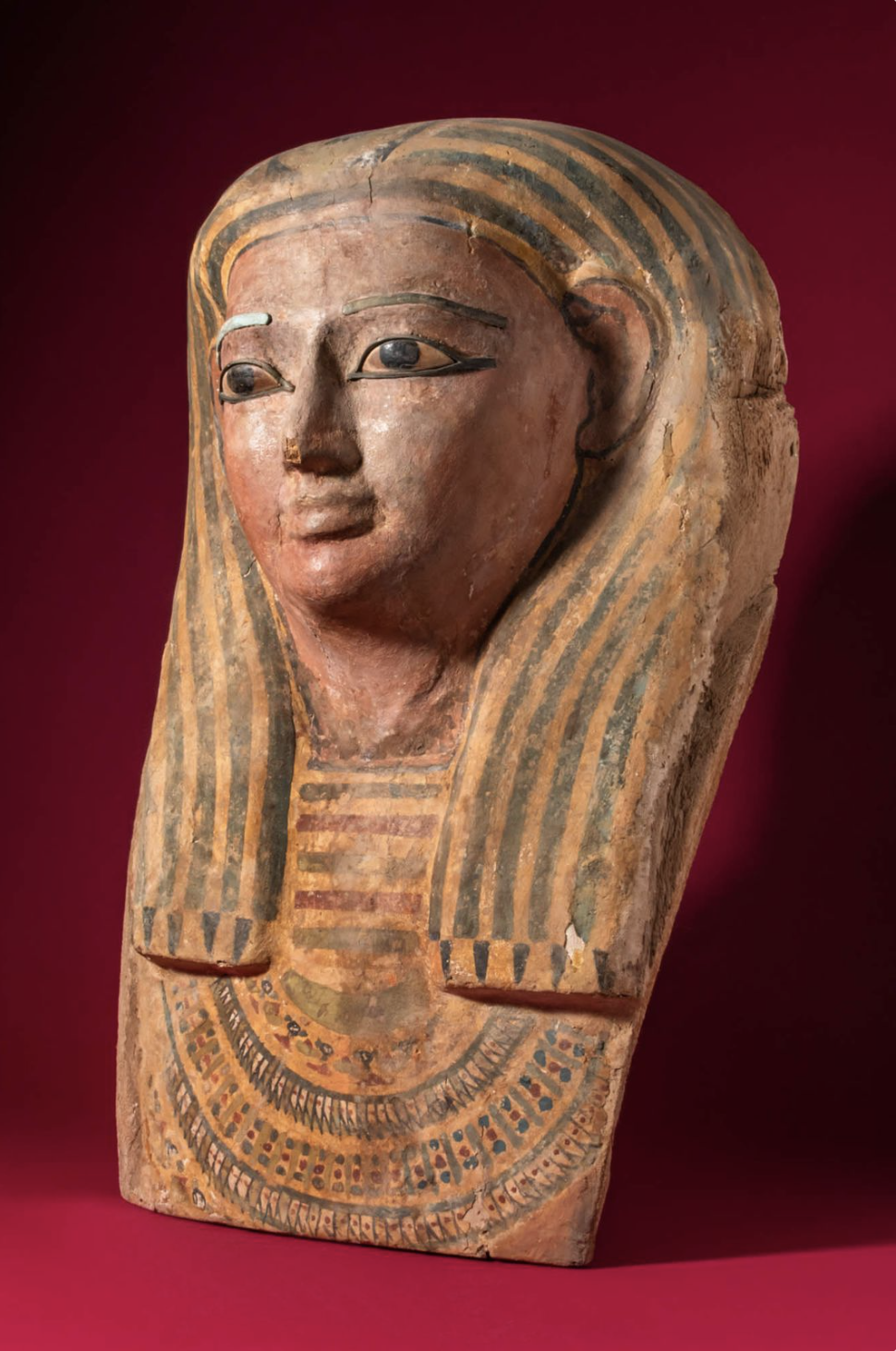
Ancient Egyptian Wooden Coffin Lid
600-300 BC
-
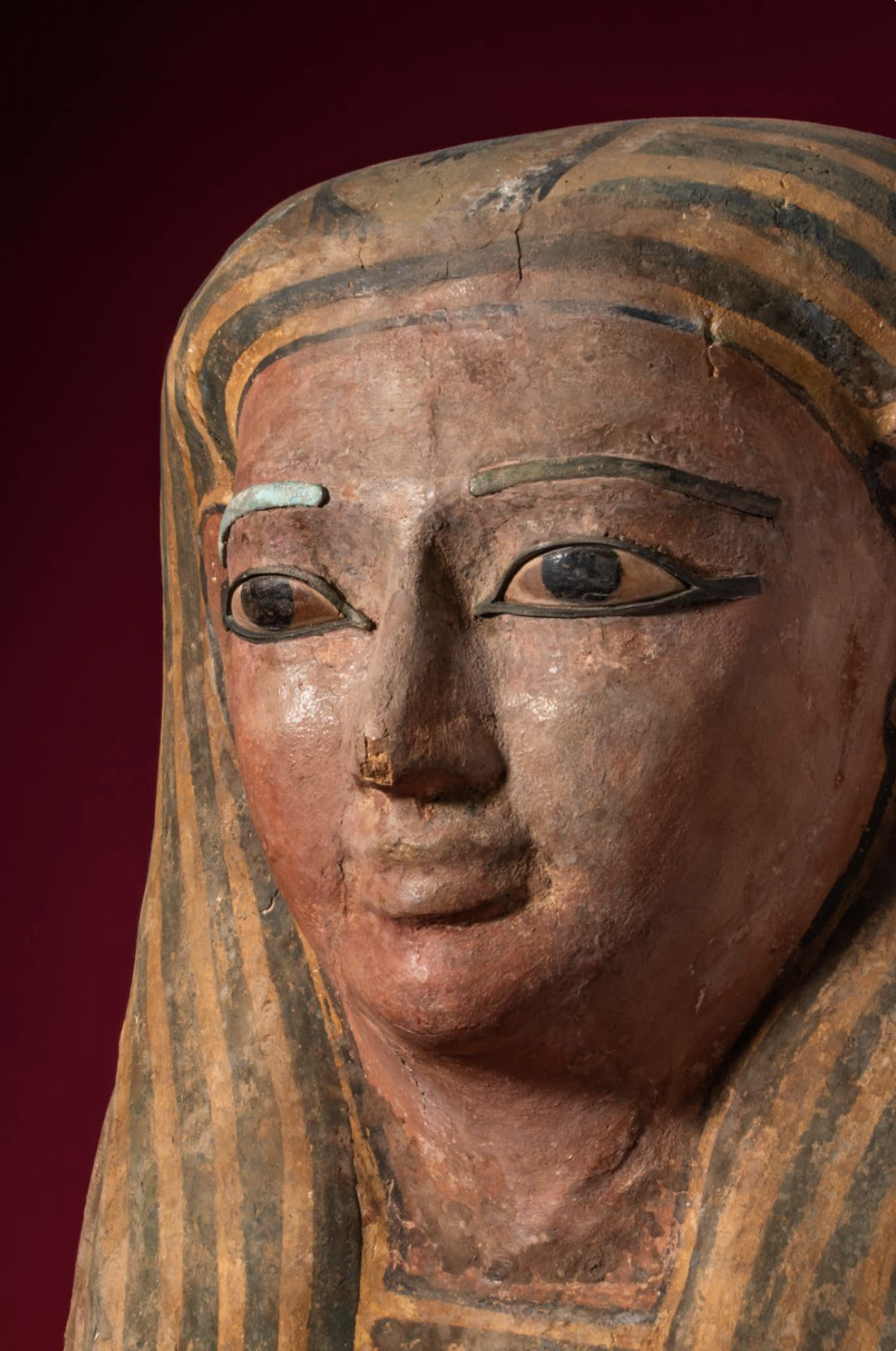
This remarkable piece represents the upper section of an ancient Egyptian anthropoid coffin, expertly crafted from a solid piece of sycamore fig wood, commonly used in elite burials of the time. The surface, though aged and weathered, still bears subtle traces of original pigments, hinting at its former vibrancy and the care taken in its construction. The shape is contoured to resemble the human form, a stylistic evolution from earlier rectangular coffins to more naturalistic sarcophagi that emerged during the Middle Kingdom and were later refined in the New Kingdom. One of the most striking feature of this piece is the pair of inlaid eyes embedded into the coffin’s surface, symbolically placed to allow the deceased to “see” into the afterlife. Each eye is composed of a bronze outline that defines the almond shape of the eye and contains delicate ivory inlays representing the sclera, with additional dark stones used for the pupils. Such detailed and precious craftsmanship indicates that this coffin likely belonged to a person of high social status, perhaps a noble, high priest, or court official. In Ancient Egyptian belief, the tomb and coffin served as the eternal home for the soul, and the effort and artistry poured into these structures reflected the importance of ensuring a safe journey into the afterlife. This coffin fragment, despite its age and the loss of the full structure, offers profound insight into ancient funerary traditions, the spiritual beliefs of the time, and the exceptional craftsmanship that defined elite burial practices.
-
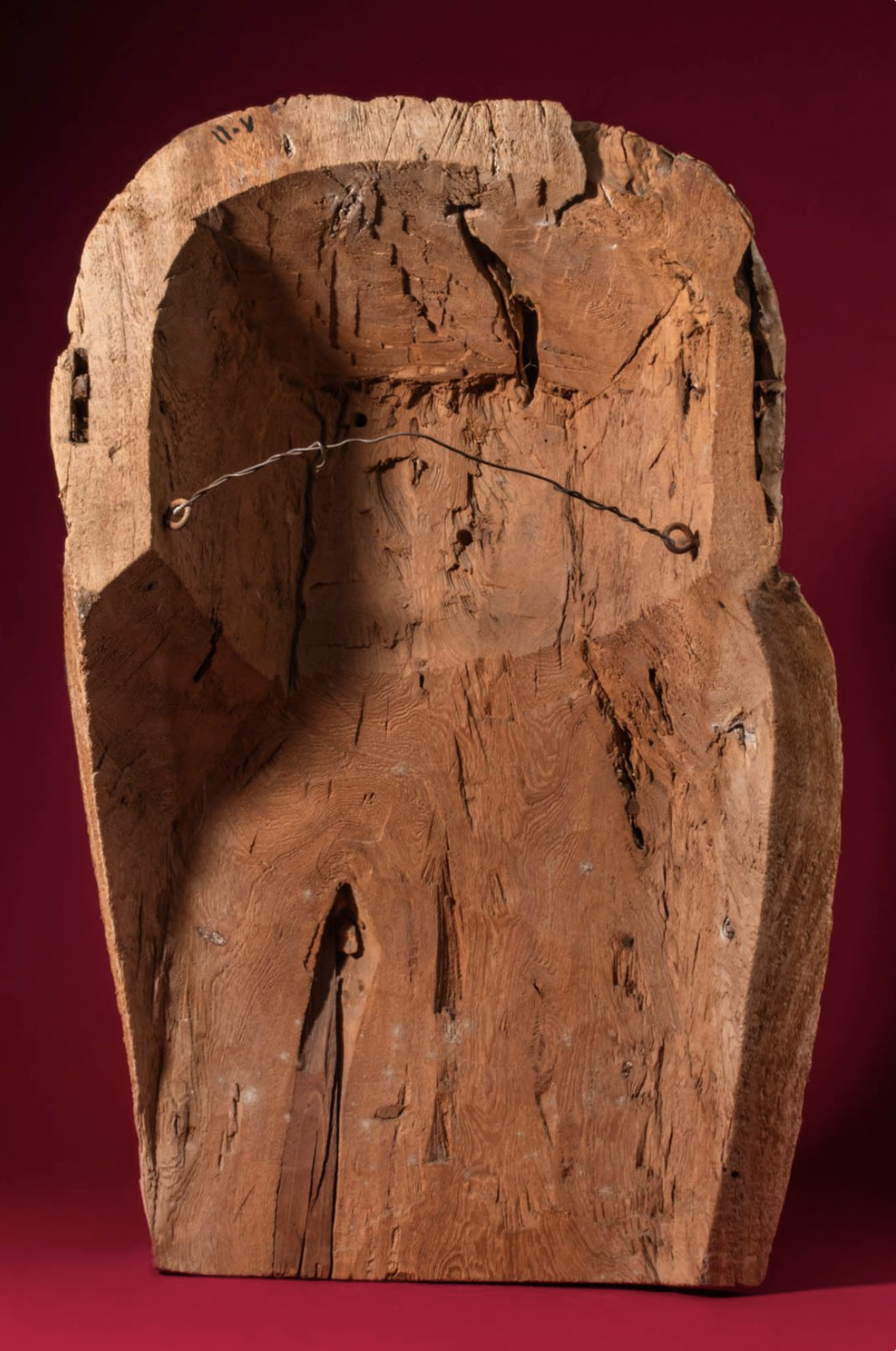
This piece is structurally stable despite visible splits and deep cracks predominantly along the grain, particularly evident on the reverse side. Historical insect activity, shown by inactive boreholes, is present without signs of active infestation. The painted front surface shows moderate pigment loss, abrasions, and discolouration, especially noticeable at the wig edges, decorative collar, and left shoulder, where the original gesso layer is flaking, exposing the underlying wood. Small areas of gesso loss and minor chips are also apparent along the edges. Modern mounting hardware has been added to the reverse side, without compromising structural integrity. Areas of in painting present on the left face cheek, and where the neck meets the decorated necklace, no extra wood added. Areas of corrosion on the right bronze eye brow. The eyes are original ivory and intact.
-
The Hellenic Museum Australia.
280 William St, Melbourne VIC 3000.
Exhibition; Underworld, 2025.
Identifier: L.2025.11.U