An Australian First - Ancient Greek Armour Exhibited at Melbourne’s Hellenic Museum
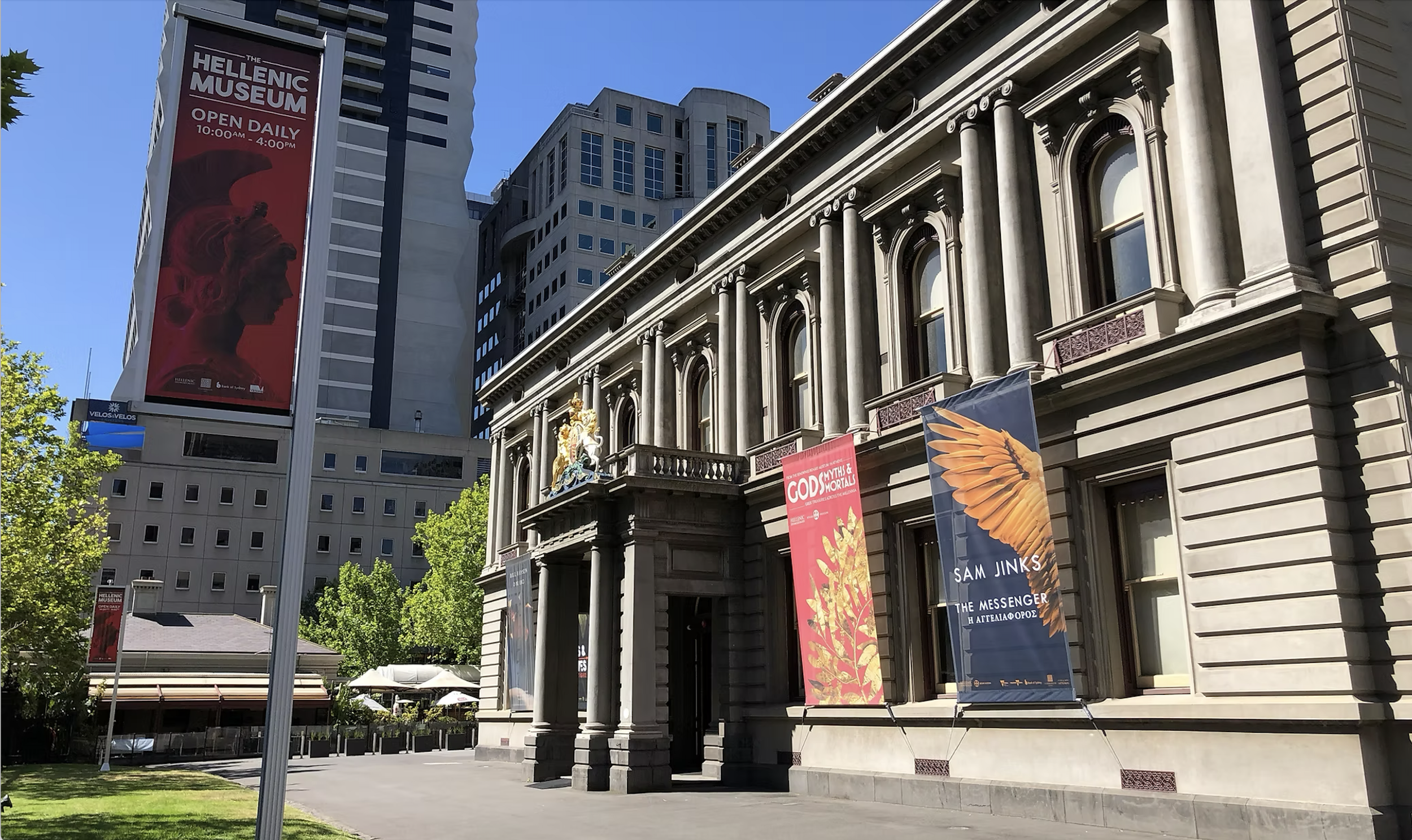
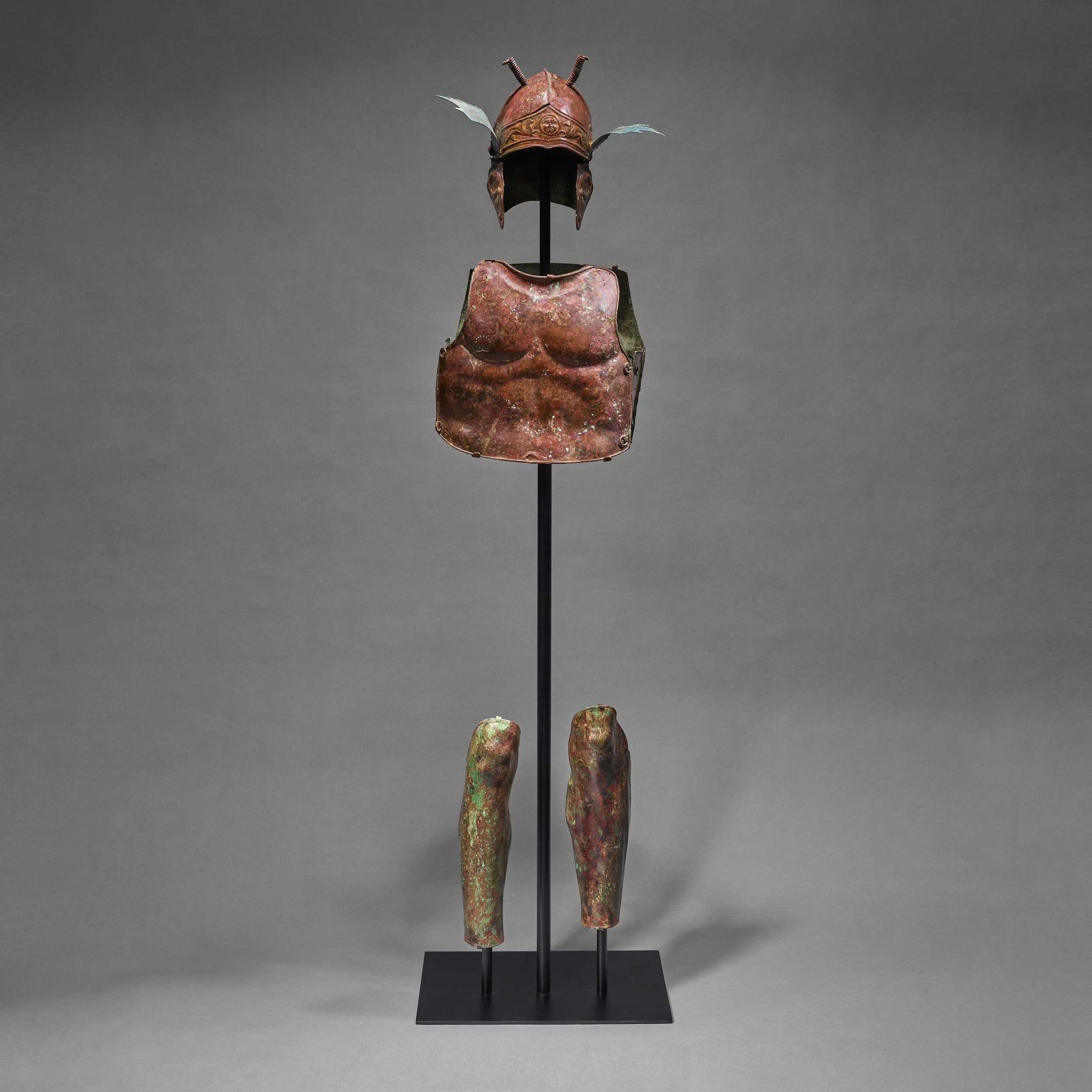
Few objects capture the imagination quite like the armour of an ancient Greek warrior. For the first time in Australia, visitors to Melbourne's Hellenic Museum were given the opportunity to stand before a complete Ancient Greek bronze hoplite panoply, an exceptionally rare survival from the ancient world dating between approximately 400 and 200 BC.
Loaned by collector Elias (Louis) Dounis, the armour formed the centrepiece of the museum's acclaimed Heroes and Hoplites: Warfare in Ancient Greece exhibition, offering Australian audiences an unprecedented opportunity to experience a complete suit of Greek warrior equipment firsthand.
Complete examples of ancient Greek armour are exceedingly rare. While individual helmets, greaves, and breastplates survive in museum collections throughout the world, intact panoplies consisting of multiple matching components are seldom encountered. The Melbourne display represented the only exhibition of its kind in Australia and provided a remarkable insight into the appearance and equipment of the Greek hoplite, the heavily armed citizen-soldier who dominated Mediterranean battlefields for centuries.
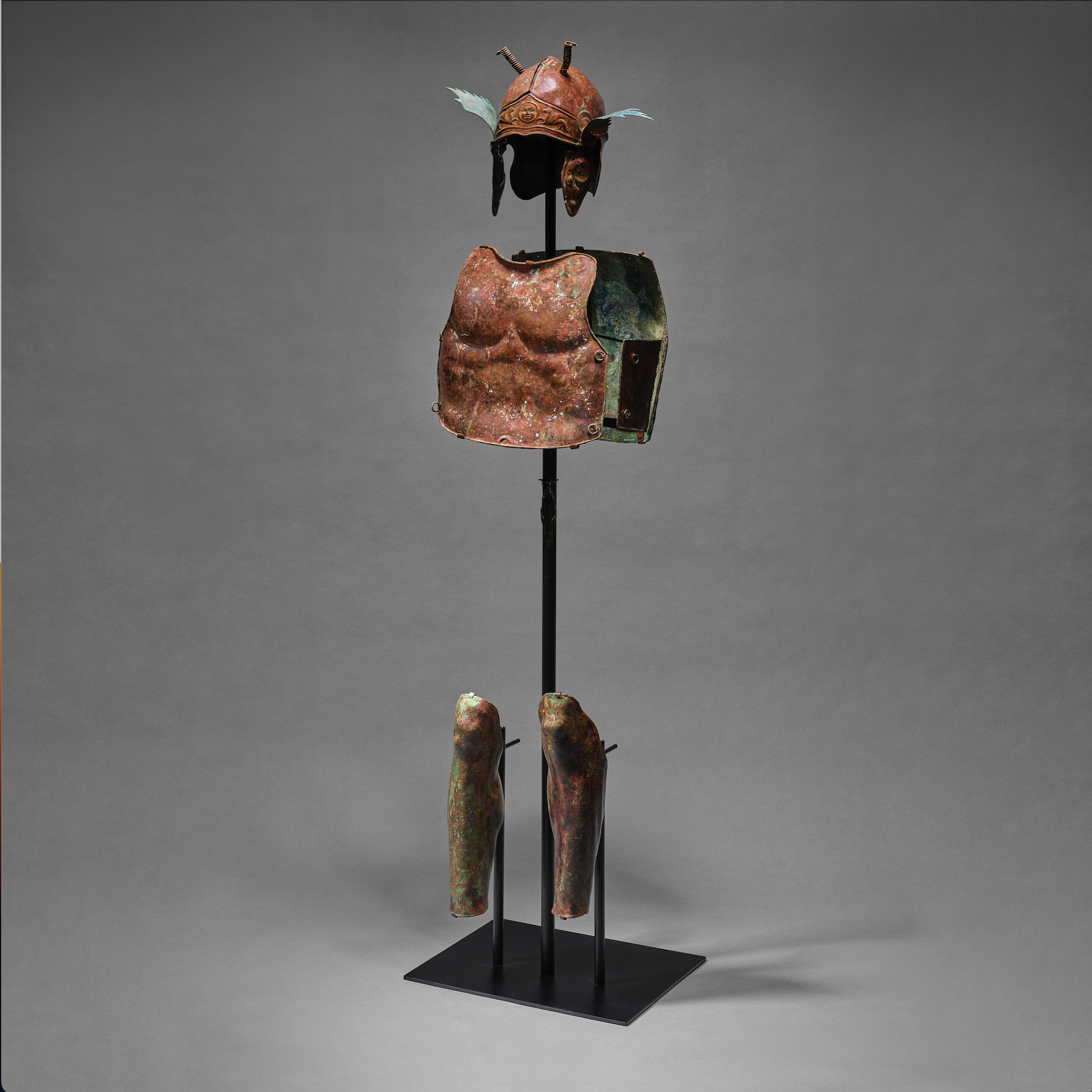
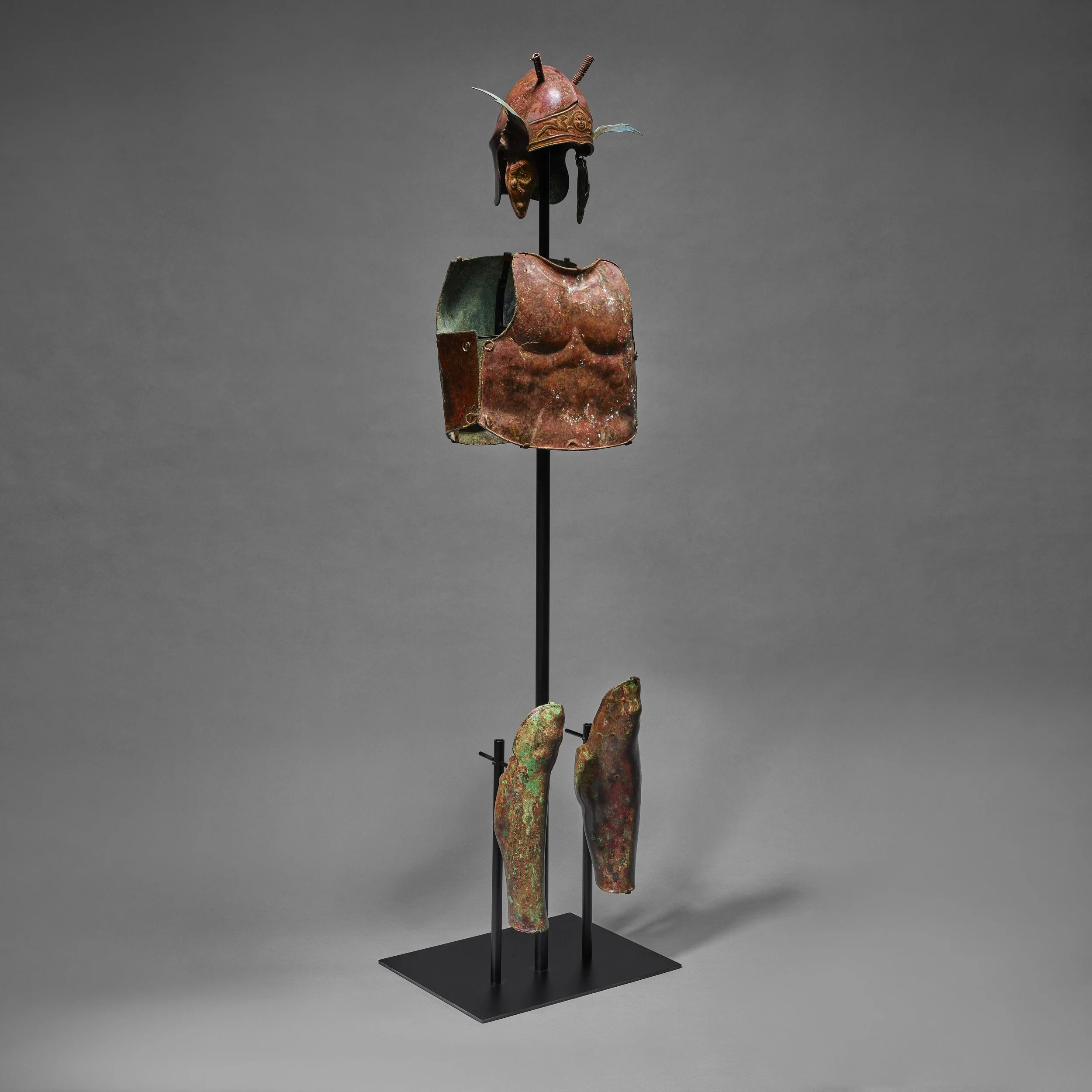
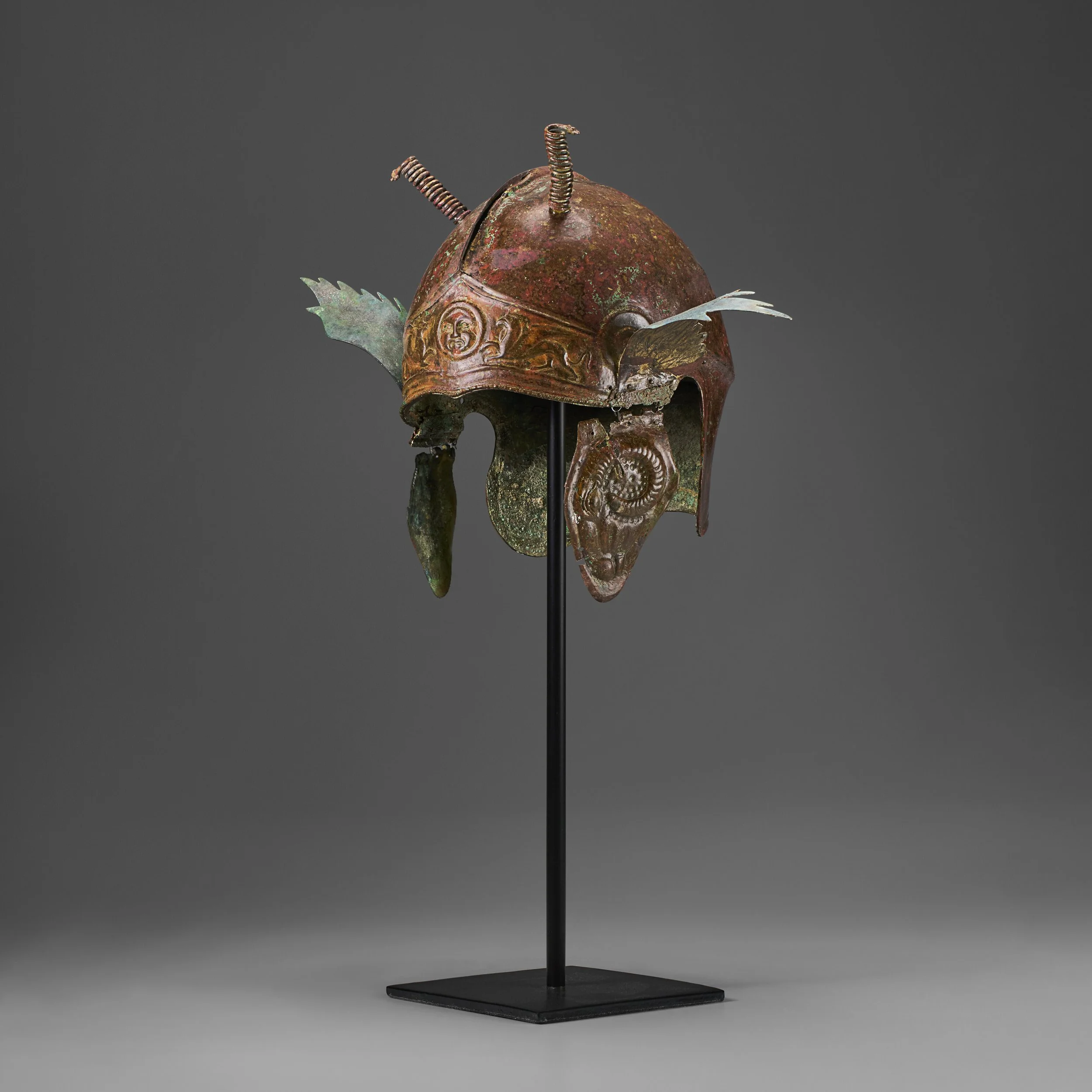
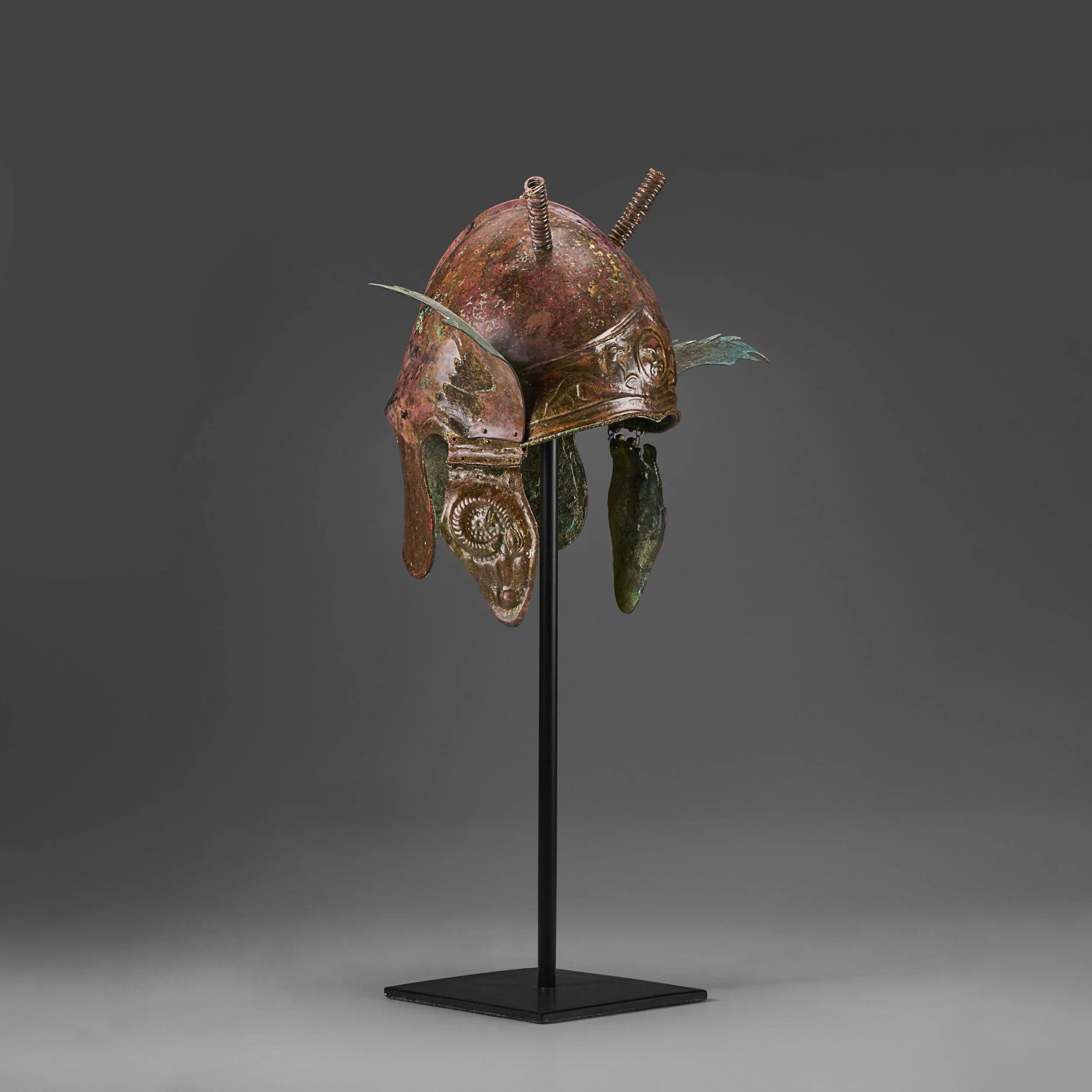
The panoply consists of a bronze Chalcidian helmet, an anatomically modelled cuirass with its original back and side plates, and a pair of bronze greaves designed to protect the lower legs. Together, these components demonstrate the sophisticated military technology and artistic craftsmanship achieved by Greek armourers during the Classical and Hellenistic periods.
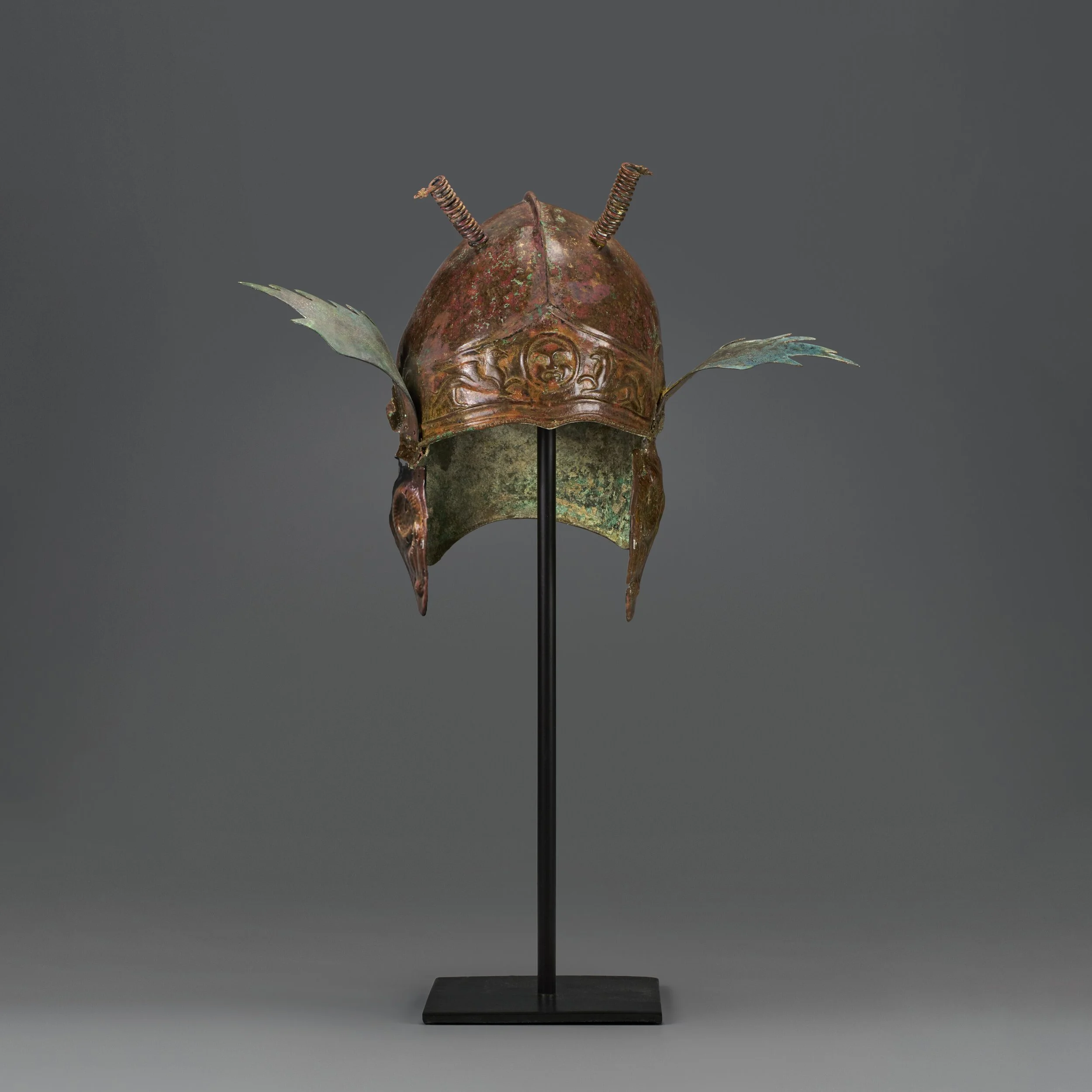
Particularly striking is the helmet, which embodies both the practical and symbolic aspects of ancient warfare. A raised ridge runs across the crown, terminating in elaborate coiled serpent-headed plume holders that would once have supported a crest. Incised wings decorate either side of the helmet, while the forehead is centred by a circular gorgoneion—the fearsome face of Medusa—flanked by a pair of winged griffins. The cheek guards are further adorned with embossed ram's heads, creating an imposing appearance intended to inspire confidence in the wearer and intimidation in the enemy.
The armour was produced using the repoussé technique, an advanced method of metalworking in which decorative elements are hammered into relief from the reverse side of the bronze sheet. This process allowed armourers to create highly sculptural forms while maintaining the strength and functionality required for combat. The surviving decoration demonstrates the remarkable level of artistry invested in military equipment, blurring the distinction between functional armour and works of art.
Beyond its artistic significance, the panoply provides an important connection to the social and cultural world of ancient Greece. For the hoplite, armour was far more than battlefield protection. It represented civic identity, social status, military obligation, and personal honour. The heavily armed infantryman stood at the heart of Greek warfare and played a central role in the development of the city-state, making surviving examples of hoplite equipment among the most important artefacts for understanding ancient Greek society.
The armour also possesses an impressive modern history. Prior to its display in Australia, the panoply was exhibited at the Musée d'Art Classique de Mougins in France between 2011 and 2023 (Inv. Nos. MMoCA429a–c), where it formed part of one of Europe's most respected collections of Classical antiquities. Its appearance at Melbourne's Hellenic Museum therefore continued a distinguished exhibition history and introduced the object to a new audience on the other side of the world.
Within the broader context of Heroes and Hoplites: Warfare in Ancient Greece, the panoply helped illustrate the evolution of Greek military equipment and the experience of the citizen-soldier. Displayed alongside other artefacts relating to warfare, religion, and daily life, it offered visitors a tangible connection to the realities of combat in the ancient Mediterranean.
For many visitors, the opportunity to view a complete suit of ancient Greek armour was a highlight of the exhibition. More than two thousand years after its creation, the panoply continues to inspire fascination and admiration, standing as a powerful reminder of the skill of ancient craftsmen and the enduring legacy of Greek civilisation.
As the most significant example of ancient Greek armour ever displayed in Australia, the panoply represents an important milestone in the presentation of Classical antiquities within the country. Its exhibition at Melbourne's Hellenic Museum provided a rare opportunity to encounter an object that not only survived the ancient world, but continues to tell the story of the warriors, artists, and societies that created it.